Difference between the Sacred Himalayan Pilgrimages – Adi Kailash vs Kailash Mansarovar
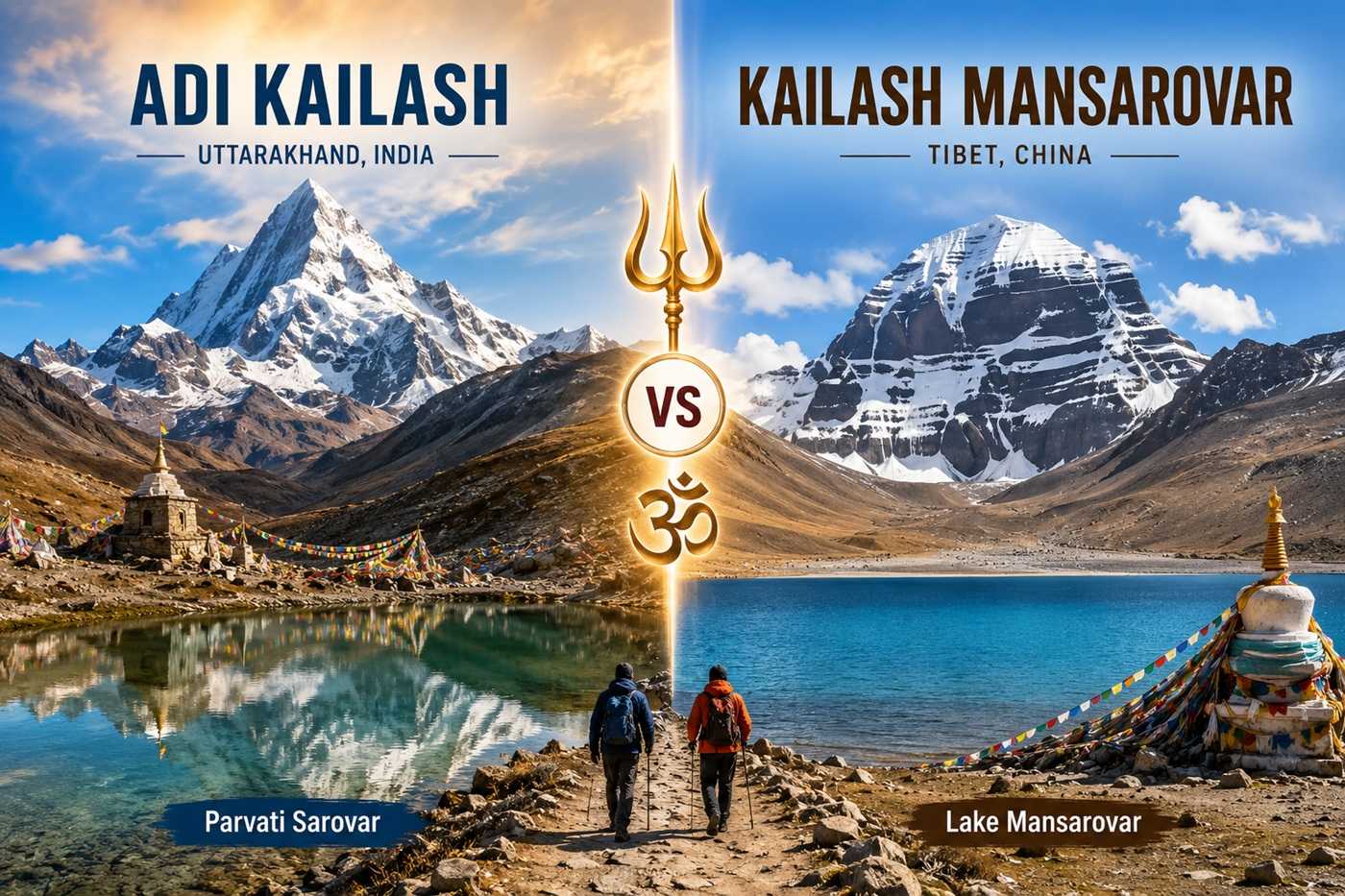
For devotees of Lord Shiva, few journeys are as spiritually meaningful as a pilgrimage to the Himalayas. Among the most revered destinations are Adi Kailash in Uttarakhand, India, and Mount Kailash & Mansarovar Lake in Tibet (China). While both are associated with Lord Shiva and attract thousands of pilgrims every year, they offer very different experiences in terms of accessibility, travel requirements, terrain, and spiritual significance.
If you’re planning a Himalayan pilgrimage, this detailed comparison will help you understand the differences between Adi Kailash vs Kailash Mansarovar and choose the journey that best matches your spiritual aspirations and travel preferences.
What is Adi Kailash?
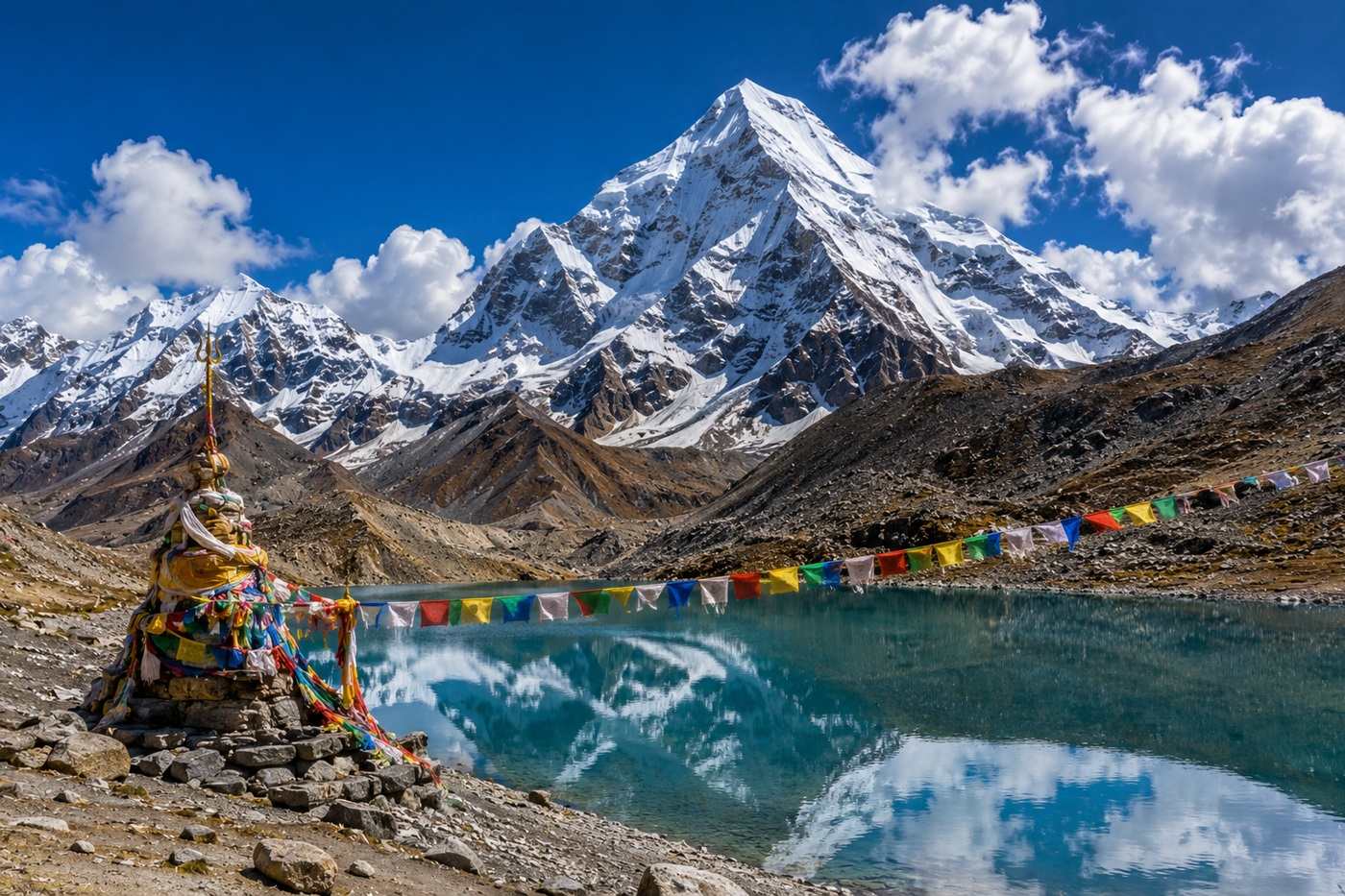
Adi Kailash, also known as Chhota Kailash, is a sacred Himalayan peak located in the Pithoragarh district of Uttarakhand, near the Indo-Tibetan border. The mountain closely resembles Mount Kailash and is believed to be one of the divine abodes of Lord Shiva.
The pilgrimage includes visits to several spiritually significant places, including:
- Adi Kailash Peak
- Parvati Sarovar
- Om Parvat
- Kuti Village
- Gunji Village
- Kalapani
- Vyas Gufa
- Narayan Ashram
The route also offers breathtaking views of the Kumaon Himalayas, traditional villages, ancient temples, and pristine mountain landscapes.
What is Kailash Mansarovar?
Mount Kailash is located in the Tibet Autonomous Region of China and is regarded as one of the holiest mountains in the world. At its base lies the sacred Lake Mansarovar, believed to have been created by Lord Brahma according to Hindu traditions.
The Kailash Mansarovar pilgrimage is considered one of the most spiritually significant journeys for followers of:
- Hinduism
- Buddhism
- Jainism
- Bon Religion
Pilgrims usually perform the famous 52-kilometre Kailash Parikrama (Kora) around the mountain, a journey believed to cleanse sins and bring spiritual liberation.
Adi Kailash vs Kailash Mansarovar: Quick Comparison
| Feature | Adi Kailash | Kailash Mansarovar |
|---|---|---|
| Location | Uttarakhand, India | Tibet (China) |
| Country | India | China |
| Passport Required | No (Indian citizens) | Yes |
| Visa Required | No | Chinese Visa & Tibet Permit |
| Permit | Inner Line Permit | Multiple International Permits |
| Difficulty Level | Moderate | Challenging |
| Highest Altitude | Around 4,600 m | Around 5,630 m (Dolma La Pass) |
| Best Duration | 5–10 Days | 10–18 Days |
| Ideal for Families | Yes | Physically fit pilgrims |
| Road Connectivity | Good with mountain roads | International expedition |
| Parikrama | Optional sightseeing around the sacred area | 52 km trekking circuit |
| Medical Fitness | Basic fitness recommended | Strict medical screening |
Spiritual Significance
Adi Kailash
Adi Kailash is believed to be a divine meditation place of Lord Shiva and Goddess Parvati. Pilgrims experience peace while visiting Parvati Sarovar, where the reflection of Adi Kailash often creates a mesmerizing view. Nearby Om Parvat, with its naturally occurring snow pattern resembling the sacred “ॐ” symbol, adds to the spiritual experience.
The pilgrimage is peaceful, less crowded, and allows visitors to immerse themselves in nature and devotion.
Kailash Mansarovar
Mount Kailash is revered as the cosmic center of the universe in several religions. Completing the Kailash Parikrama is considered an act of immense spiritual merit. Bathing in Lake Mansarovar and circumambulating Mount Kailash are believed to purify the soul and symbolize a profound spiritual transformation.
Accessibility
One of the biggest differences lies in accessibility.
Adi Kailash
Indian pilgrims can travel to Adi Kailash entirely within India. The journey generally starts from Kathgodam, Pantnagar, Haldwani, or Delhi, proceeding through Dharchula, Gunji, and Kuti before reaching Jolingkong and Adi Kailash.
The route is well suited for pilgrims who prefer a road-based Himalayan journey with limited trekking.
Kailash Mansarovar
Visiting Mount Kailash requires:
- Passport
- Chinese Visa
- Tibet Travel Permit
- Additional travel permissions
- International travel arrangements
Depending on the chosen route, pilgrims may travel via Nepal or through officially approved government-operated routes.
Trekking Difficulty
Adi Kailash
The Adi Kailash Yatra involves mountain roads, high-altitude travel, and short walks at selected locations. Most of the route can be covered by vehicle, making it suitable for many age groups, provided they are in reasonably good health.
Kailash Mansarovar
The Kailash Mansarovar pilgrimage is physically demanding. The trek crosses Dolma La Pass, one of the highest points on the route, where oxygen levels are significantly lower. Good physical fitness and proper acclimatization are essential.
Altitude Comparison
| Destination | Approximate Elevation |
| Adi Kailash | 4,594 metres |
| Om Parvat | 4,500 metres |
| Lake Mansarovar | 4,590 metres |
| Dolma La Pass | 5,630 metres |
Higher altitude increases the possibility of altitude-related illness, making preparation especially important for the Kailash Mansarovar pilgrimage.
Cost Comparison
Adi Kailash
The Adi Kailash Yatra is generally more affordable due to domestic travel, shorter duration, and simpler logistics. Tour costs vary based on itinerary, accommodation, transportation, and inclusions.
Kailash Mansarovar
The Kailash Mansarovar Yatra typically involves higher expenses because of international permits, visas, logistics, transportation, and a longer travel schedule.
Best Time to Visit
Both pilgrimages are generally undertaken during the Himalayan travel season.
Adi Kailash
- May to June
- September to October
Kailash Mansarovar
The pilgrimage season is usually concentrated during the warmer months, when weather and road conditions are more favourable. Dates may vary depending on the operating authorities and prevailing conditions.
Which Pilgrimage Should You Choose?
Choose Adi Kailash if you:
- Prefer travelling within India.
- Want a spiritually enriching journey with moderate physical effort.
- Are travelling with family or senior citizens.
- Wish to experience sacred Himalayan destinations like Om Parvat, Parvati Sarovar, Narayan Ashram, and Kuti Village.
- Have limited travel time.
Choose Kailash Mansarovar if you:
- Dream of visiting the original Mount Kailash.
- Are prepared for international travel and permit formalities.
- Are physically fit for high-altitude trekking.
- Can dedicate a longer duration for the pilgrimage.
Can You Visit Both?
Yes. Many devotees begin with the Adi Kailash Yatra as a spiritually significant Himalayan pilgrimage before planning the more demanding Kailash Mansarovar Yatra later. Although they are different destinations, each offers its own unique blend of devotion, natural beauty, and cultural heritage.
Final Thoughts
Both Adi Kailash and Kailash Mansarovar hold immense spiritual importance for devotees of Lord Shiva. While Kailash Mansarovar is known worldwide for its legendary parikrama and international significance, Adi Kailash offers an equally serene and deeply devotional experience within the Indian Himalayas.
If you seek a pilgrimage that combines sacred temples, pristine Himalayan scenery, ancient villages, and accessible spiritual travel, the Adi Kailash Yatra is an exceptional choice. For many devotees, it serves not only as a destination in itself but also as an inspiring step on a lifelong spiritual journey.