
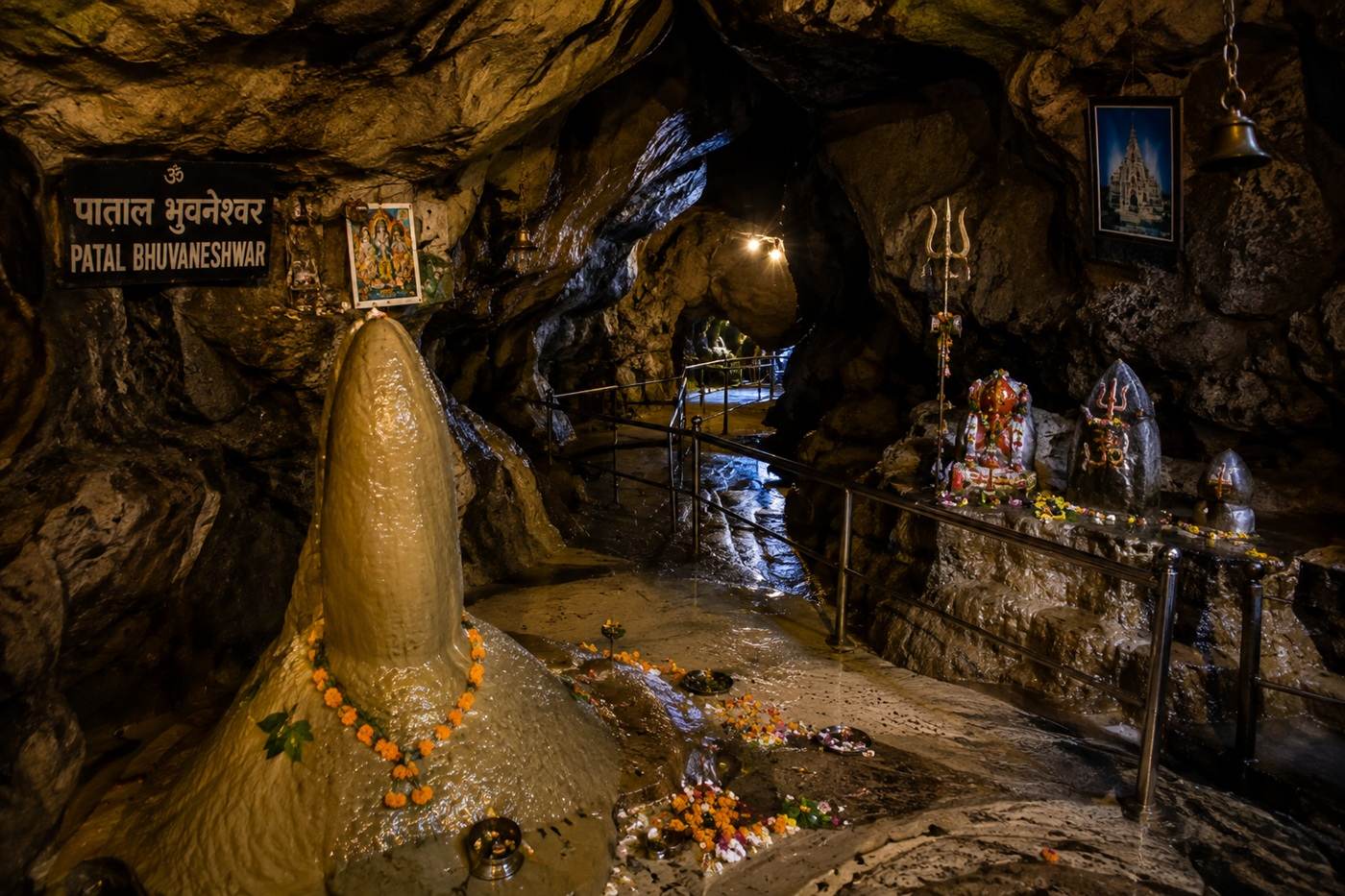
About Patal Bhuvneshwar Cave in Uttarakhand
Hidden in the serene hills of Kumaon, Uttarakhand, Patal Bhuvaneshwar is one of India’s most fascinating spiritual destinations. Unlike traditional temples built above ground, this sacred shrine lies inside a naturally formed limestone cave that has inspired pilgrims, saints, and explorers for centuries.
According to Hindu beliefs, the cave is home to countless naturally formed rock structures associated with Lord Shiva, Lord Ganesha, Sheshnag, the Char Dham, and many other deities. Its narrow passages, ancient formations, and spiritual atmosphere make Patal Bhuvaneshwar a destination where mythology and nature come together in an extraordinary way.
Whether you are travelling to Adi Kailash, Jageshwar Dham, Chaukori, or other sacred destinations in Kumaon, a visit to Patal Bhuvaneshwar adds a memorable spiritual experience to your journey.
What is Patal Bhuvaneshwar?
Patal Bhuvaneshwar is an ancient underground cave temple located in the Pithoragarh district of Uttarakhand at an elevation of approximately 1,350 metres above sea level. The cave extends deep beneath the earth and is reached by descending a steep, narrow entrance with the assistance of chains and railings.
Inside, visitors encounter spectacular limestone formations shaped over thousands of years by natural geological processes. Over generations, these formations have become closely linked with Hindu mythology, making the cave one of the most revered spiritual sites in the Kumaon region.
The experience is both devotional and adventurous, offering visitors a rare opportunity to explore a sacred natural cave while appreciating its geological beauty.
Spiritual Significance
Patal Bhuvaneshwar is primarily dedicated to Lord Shiva, who is believed to reside within the cave in a divine form. Local traditions also associate the cave with numerous Hindu deities and sacred symbols.
Many devotees believe that the cave represents a spiritual gateway where the energies of multiple holy places converge. The naturally formed rock formations are traditionally identified with sacred symbols connected to various legends, making the cave an important pilgrimage destination for devotees of Lord Shiva.
The calm, dimly lit interior encourages quiet reflection and offers a unique spiritual atmosphere unlike any conventional temple.
Highlights of Patal Bhuvaneshwar
Ancient Limestone Cave
The cave itself is the main attraction. Its intricate formations, narrow chambers, and naturally sculpted interiors create a fascinating underground landscape.
Sacred Shiva Shrine
Deep within the cave lies the main shrine where pilgrims offer prayers and seek blessings.
Unique Geological Formations
The cave showcases remarkable stalactites and stalagmites that have developed naturally over thousands of years, giving the temple its distinctive appearance.
Peaceful Himalayan Setting
Surrounded by pine and oak forests, the temple offers a refreshing escape from crowded pilgrimage centres.
Easy Combination with Nearby Destinations
Patal Bhuvaneshwar is conveniently included in many itineraries covering:
- Adi Kailash Yatra
- Om Parvat
- Jageshwar Dham
- Chaukori
- Munsiyari
- Kausani
- Almora
Best Time to Visit
Patal Bhuvaneshwar welcomes visitors throughout the year, but the most pleasant seasons are:
Spring and Summer (March to June)
Comfortable weather and clear roads make this an ideal time for sightseeing and pilgrimage.
Autumn (September to November)
The post-monsoon months offer lush greenery, pleasant temperatures, and excellent visibility across the Kumaon hills.
Winter (December to February)
Winter brings cool weather and peaceful surroundings. Visitors should carry warm clothing, especially during mornings and evenings.
Heavy monsoon rainfall may occasionally affect road conditions, so travellers should check local weather updates before planning their visit.
How to Reach Patal Bhuvaneshwar
By Air
The nearest airport is Pantnagar Airport, connected to several major Indian cities.
By Train
The nearest major railway stations include:
- Kathgodam
- Haldwani
- Tanakpur (for some routes)
From these stations, taxis and buses are available toward the Kumaon region.
By Road
Patal Bhuvaneshwar is well connected by road with destinations such as:
- Almora
- Chaukori
- Pithoragarh
- Dharchula
- Kausani
- Kathgodam
Many Adi Kailash tour itineraries include Patal Bhuvaneshwar as a sightseeing stop during the return journey.
Travel Tips
- Wear comfortable footwear with good grip.
- Descend carefully inside the cave using the provided chains and railings.
- Avoid carrying bulky luggage into the cave.
- Elderly visitors should assess the steep descent before entering.
- Follow the instructions of local guides and temple authorities.
- Photography rules may vary, so confirm before taking pictures.
- Help preserve the cave by avoiding litter and respecting the natural formations.
Nearby Attractions
A visit to Patal Bhuvaneshwar can be combined with several popular destinations:
Chaukori
A peaceful hill station famous for panoramic Himalayan views and tea gardens.
Jageshwar Dham
An ancient complex of stone temples dedicated to Lord Shiva, surrounded by majestic deodar forests.
Adi Kailash
One of the most sacred Himalayan pilgrimage destinations associated with Lord Shiva.
Om Parvat
Known for its naturally formed snow pattern resembling the sacred “Om” symbol.
Dharchula
The gateway town for the Adi Kailash and Om Parvat pilgrimage.
Why Include Patal Bhuvaneshwar in Your Adi Kailash Itinerary?
Many pilgrims choose to visit Patal Bhuvaneshwar while travelling to or returning from the Adi Kailash Yatra because it complements the pilgrimage with a completely different spiritual experience.
While Adi Kailash showcases the grandeur of the Himalayas, Patal Bhuvaneshwar reveals the hidden beauty beneath the earth. Together, these destinations create a balanced journey that combines mountain landscapes, sacred traditions, and remarkable natural formations.